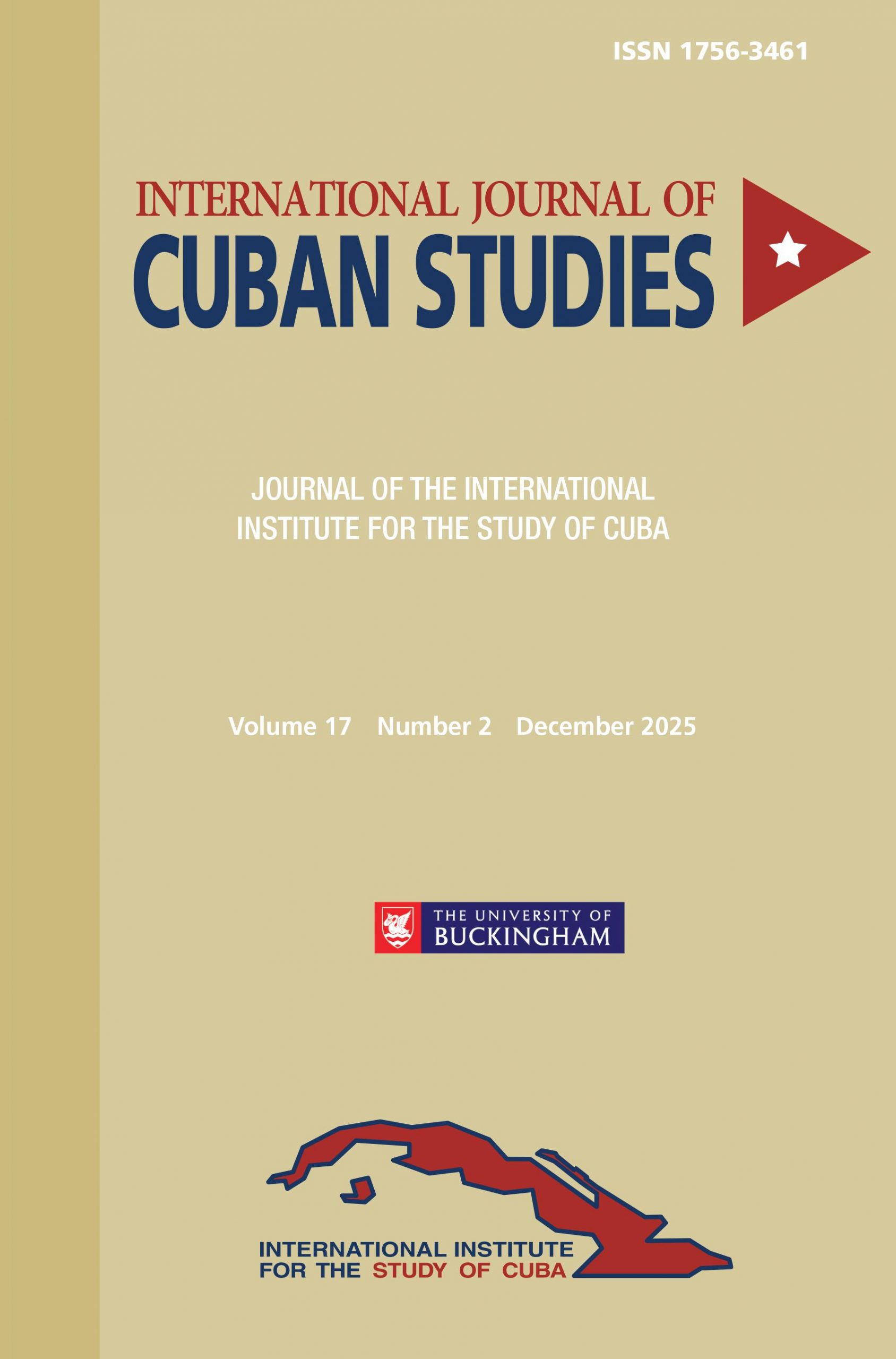
 The latest issue of International Journal of Cuban Studies, Volume 17, Issue 2 explores key debates in Cuba’s past and present. Featuring two articles on the Island’s political and urban development; two on food sustainability and sovereignty, permaculture, and milk production; two articles on the healthcare system and pharmaceutical and biotechnology industries; and one on education and English language teaching. Editor Al Campbell introduces the issue in “The Cuban Revolution as More than What Cuba is Today, and In This Issue”.
In “1 May and Anarchism in Cuba: Transnational Connections, National Issues”, Amparo Sánchez Cobos focuses on the anarchist-led struggle in Cuba after 1886-7 to make 1st May an International Workers’ Day.
Lucía Silva Fernández, Ruslan Muñoz Hernández and Alexis Jesús Rouco Méndez continue their research on the pre-revolutionary urban growth of Havana in “Urban Property in Havana [1934–1960]” to extract the lessons it can offer for today. In “Between Australia and Cuba: The Introduction of Permaculture to Address Sugar Addiction in the Economy and Strengthen Food Security” Sasha Gillies-Lekakis and Heidi Zogbaum describe the ecological challenges Cuba’s agriculture has faced after a century of intensive farming practices. They also examine the Australian-Cuban permaculture projects launched in 1993 and 1994, exploring their results and long term impact. Rémy Herrera two part study “Sistema de salud e industrias farmacéuticas y biotecnológicas en Cuba, o cómo se materializa una revolución socialista (1a parte)” and “(2a parte)” trace how the Cuban Revolution built a comprehensive, universal, effective, and free public health system and examines the origins and development of its local pharmaceutical and biotechnology industries. It also presents Cuba’s international cooperation in medical matters. Part 2 looks at Cuba’s internationalist health missions and analyses the measures adopted by health authorities in response to the COVID-19 pandemic. Together, the articles highlight what is distinctive about health and medical research systems within the framework of a socialist society, as well as the problems they face, largely attributable to the US embargo.Stephen Wilkinson, Diana Rosa Morales Rumbaut, Ivanie Lucena Jiménez and Denis Raúl Cardoso Rodríguez complete this issue with an insightful case study of a highly successful programme in the state-budget sector (higher education) “Successful English Language Teaching in a Resource-Limited Context: Lessons from Central Cuba”.
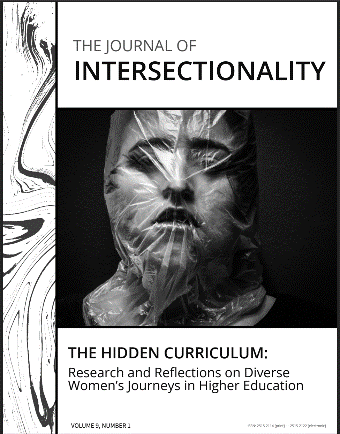 In this special issue of the Journal of Intersectionality, Volume 9, Issue 1, scholars explore the unspoken rules, beliefs, and institutional power structures that shape diverse women’s experiences within Academia. Through personal narratives and critical reflections, this issue illuminates how gendered dynamics influence access, belonging, mentorship, and career advancement in higher education. Guest Editors Autumn Cockrell-Abdullah and Rhonda Hylton introduce the issue in “The Often Invisible, Yet Deeply Contested Weight of Academia”.
Having grown up in Iraq and relocated to the USA, Entidhar Al-Rashid explores “Rest and Joy as Resistance: The Intersectionality of a First-Generation and Non-Native Faculty Member in Academia”.
In “Purpose and Priorities: Joy-seeking as Sensemaking as a Black Woman Scholar” Rhonda Hylton studies the ways she tries to cultivate and lean into joy despite the chaos of higher education and the politics of the United States.
Lorrie Lynn’s essay “Reflections on the Academy: Tales from an Arab-Jewish Genocide Scholar, 2020-2025” weaves together personal narrative and pedagogical reflection, exploring the intersections of mixed Jewish identity, gender, and the practice of teaching, in an academy whiplashed from virtue signalling to polarisation. Kristie Smith considers her experience as a Black woman of the U.S. urban south, a place of competing beauty and ugliness in “Years That Ask Questions, Years That Answer: Reflections Of A Black Woman Professor In Early Career”.