
 We established the African Journals Initiative as we are committed to supporting African journals in the social sciences and humanities. This piece by Kizza Racheal and Stephanie Kitchen in The Scholarly Kitchen speaks to that commitment while highlighting some of the challenges researchers in the Global South continue to face. Read it here.
To keep up with the latest news from the African Journals Initiative, sign up to our dedicated newsletter here.
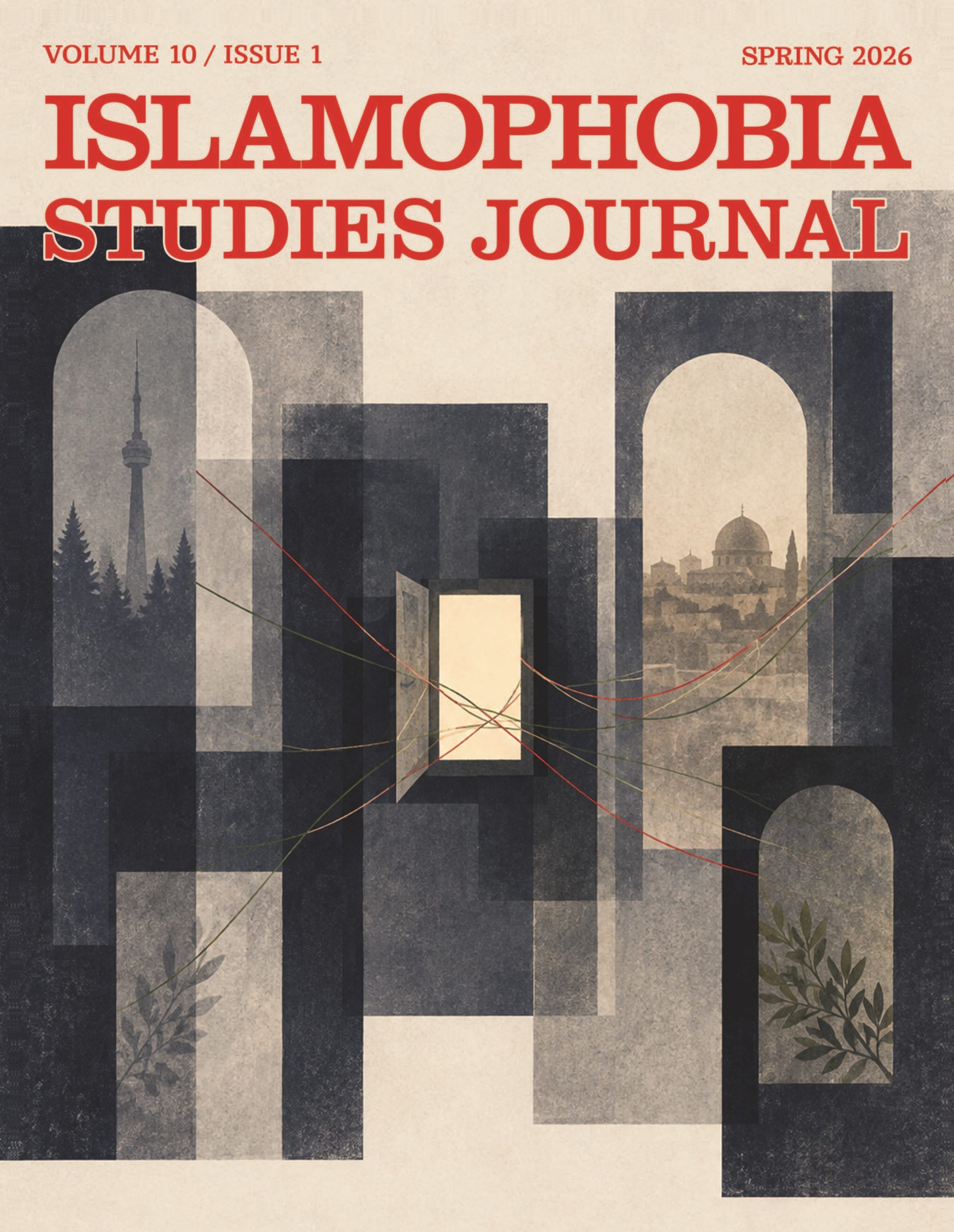 The latest issue of Islamophobia Studies Journal (Volume 10, Issue 1) opens with Editor Hatem Bazian’s article “Islamophobia, Disinformation, and the Erosion of ʿAsabiyyah: Ibn Khaldūn and Late-Imperial America”. Siham Elkassem’s article “Rising Anti-Palestinian and Anti-Muslim Racism in Canada: A National Study of Muslim Youth Experiences During the Genocide in Gaza, Palestine” highlights the social, political, and emotional toll of youth activism and calls for institutional accountability and concrete support for those organising for justice. Digital war games have been widely used as tools to promote sentiments of Islamophobia. In “Digital Geopolitics and the Cultural Production of Islamophobia: Gaming, Representation, and Postliberal Racism”, Aicha Adoui introduces the idea of “digitally driven neo-Islamophobia,” which shifts the conventional media-based framing of Islamophobia into the context of virtual mass killing to propagate an ideology of hatred toward a group of people.
In “The Islamophobia Question”, AbdoolKarim Vakil and S. Sayyid develop a genealogical account of Islamophobia, informed by engagement with Critical Muslim Studies and centred on the category of Muslimness. Fahri Agam and Ayca Arkilic examine “Why Do Muslims in New Zealand Still Not Feel Safe?: Assessing New Zealand’s Security Context After the 2019 Christchurch Terrorist Attack”. Considering New Zealand’s pre and post 2019 security context they ask why Muslims still do not feel safe after the tragedy despite unprecedented gun laws and other policy changes.
In “Framing the Muslim Question in Belgium: (Gendered) Islamophobia in Political Discourse and Policy” Arthemis Snijders provides an overview of the last ten years of the Muslim Question through a critical analysis of Islamophobic discourse and policies in the political landscape of Belgium, more specifically the Dutch-speaking regions of Flanders and Brussels. Finally, Noemi Trucco, Asmaa Dehbi, and Hansjörg Schmid explore how Muslims respond to the racism they experience in ““You tense up”: How Muslims in Switzerland Cope with Anti-Muslim Racism”.
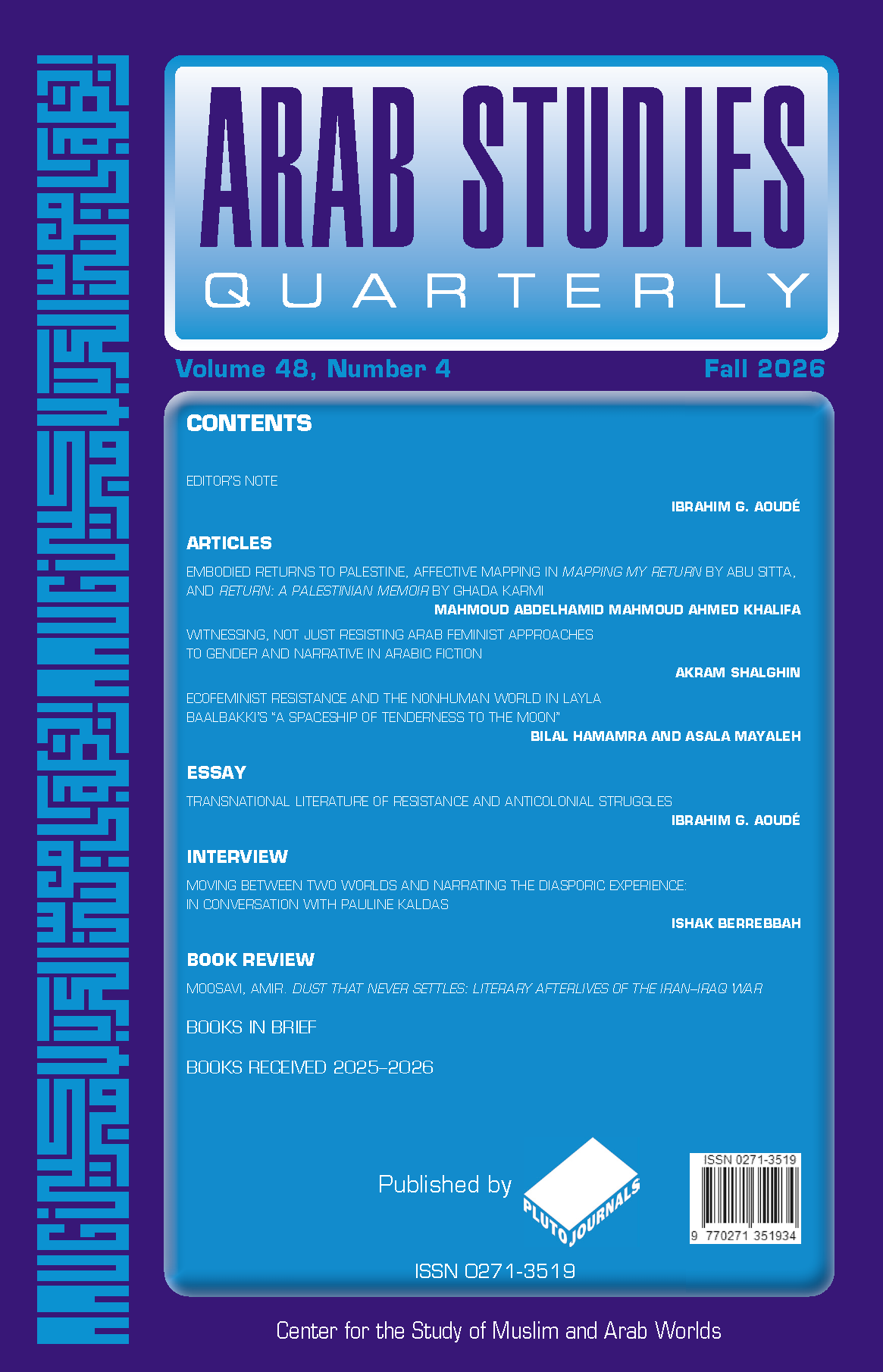 Arab Studies Quarterly’s final issue of the year (Volume 48, Issue 4) opens with “Embodied Returns to Palestine, Affective Mapping in Mapping My Return by Abu Sitta, and Return: A Palestinian Memoir by Ghada Karmi”. Mahmoud Abdelhamid Ahmed Khalifa argues that Zionist efforts “to rupture Palestinian identity rooted in land,” produce “a culture of melancholy.” Abu Sitta and Karmi defy the Zionists by narrating return, each in their own way.
Akram Shalghin’s article “Witnessing, Not Just Resisting: Arab Feminist Approaches to Gender and Narrative in Arabic Fiction,” emphasises the huge divide between Western and Arab feminists. While Western feminists proceed from an ideology of individualism and (neo)liberalism, Arab feminist critique emphasises “collective memory, ethical witness, and survival within postcolonial statehood and liberal abandonment”. The discussion calls into question Western feminist commitments and calls for a redefinition of feminist solidarity. Bilal Hamamra and Asala Mayaleh’s “Ecofeminist Resistance and the Nonhuman World in Layla Baalbakki’s ‘A Spaceship of Tenderness to the Moon,’” focuses on the narrator’s rejection of patriarchy and her “identification with nature and animals together illuminate a wide structure of domination grounded in hierarchical binaries such as man/woman, culture/nature, and subject/object”. Baalbakki’s work, with its inclusion of animate and inanimate objects, “constitutes both a feminist and ecofeminist critique of domination across gendered, material, and ecological realms.”
In his essay “Transnational Literature of Resistance and Anticolonial Struggles” editor Ibrahim G. Aoudé acknowledges that writing about Guyanese and Palestinian literature may seem incongruous, but this comparative treatment of both literatures, begins to make sense as it explores the historic commonalities between the two social formations. Both societies struggled against colonial rule under which Western colonial ideology perceives and treats the colonised as inferior. In “Moving Between Two Worlds and Narrating the Diasporic Experience: In Conversation with Pauline Kaldas”, Ishak Berrebbah interviews Egyptian-born Arab American writer Pauline Kaldas about her literary journey and her contribution to contemporary Arab American literature.