
 The latest issue of the International Journal of Critical Diversity Studies (Volume 8, Issue) brings together research on how diversity is understood, represented and put into practice in different social, political and institutional settings. Shinta Jennifer Ayebazibwe opens with “Land Reform and Sustainable Ecology: Lessons from Lesbian Land Management in South Africa”, and Zibani Ndebele and Paddington Mutekwe explore “Migrants, Work Permits and Access to Decent Work: A Case Study of Zimbabwean Migrant Workers in South Africa”.
In “The Ball Is in Your Court: Snapshots of Political Discourses in Contemporary Films about Tennis” Marta Miquel-Baldellou considers how contemporary films engage with gender, race and class. In “Exploring Talent Management in the Era of Diversity and Inclusion within a Manufacturing Company” in South Africa, Musawenkosi Donia Saurombe, Ntombovuyo Vilakazi, Lindokuhle Zwane, and Angel Machabe provide company-specific recommendations to bridge the gap between policy and practice, contributing to the development of more inclusive workplaces that support better diversity.
Ekaterina Zibrova analyses how companies in South Africa, USA and Russia present diversity work through ESG and DEI reports in “Replacing Human Rights with Innovation Metrics: A Critical Diversity Literacy Reading of ESG and DEI Reports”. Morgan Ndlovu looks at the politics of “Cultural Villages and Their Hidden Curricula in South Africa”. And finally, Mehita Iqani explores youth aspiration, inequality and climateuncertainty in “Aspirational Anxiety: Hope and Frustration in Youth Future Talk in Kenya, Mozambique and South Africa”.
 In the latest issue of the International Journal of Cuban Studies (Volume 18, Issue 1) the editors felt compelled to comment on the unbelievable escalation of the US economic aggression against the people of Cuba since the start of 2026, in violation not only of all international norms but also of huge amounts of international law “in “Blueprint of Empire: How US Cuba Policy Today Is Rooted in the War of 1898”.
This special issue on “Cuba’s Private Sector in a Time of Rapid Change” is introduced by one of guest editors, Ricardo Torres Perez. Perez goes on to examine whether Cuba’s expanding private sector can become a driver of long-term economic transformation or whether institutional constraints limit its capacity to support innovation, productivity growth, and broader structural change in “Cuba’s Institutional Environment for the Private Sector”.
In “Cuban Private Sector: Three Cross-Cutting Policies and Their Real Limits” Ileana Díaz Fernández analyses the development of the private sector in Cuba, focusing on micro, small, and medium-sized enterprises and self-employment, from their legal recognition to recent restrictions. Ricardo González Aguila considers “Margins without Scale: How Productive Segmentation Limits the Expansion of the Private Sector in Cuba” and argues that fragmented pricing systems and institutional rules also limit private-sector development.
Daybel Panellas Alvarez explores “Entrepreneurial Identity and the Reproduction of Inequalities in Cuba: Social Policy Proposals for Equitable Integration”. Dayma Echevarría León and Wilder Virgilio Naranjo Sánchez examine the impact of Cuba’s 2021 legalisation of micro, small, and medium-sized enterprises in “MSMEs and Local Development in Cuba: Reflections Based on a Case Study”.
Finally, in “Cultural and Creative Industries and Private Entrepreneurship in Cuba: Notes for Policies to Foster the Development of the Sector”, Niurka Cruz Sosa and Luis Alberto Barreiro Pousa argue that culture is a key component of economic development, contributing to diversification, growth, and employment, particularly in developing countries.
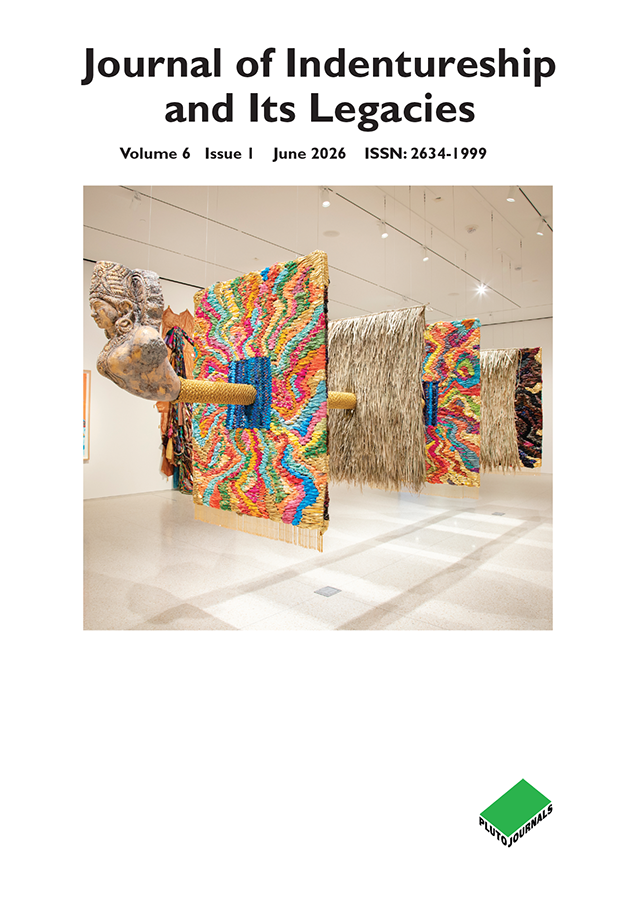 The latest issue of the Journal of Indentureship and Its Legacies, (Volume 6, Issue 1) brings together contributions that expand the archive of indenture across the Caribbean, Southeast Asia, Fiji, Mauritius and Canada. Editor Amar Wahab opens the issue with “Introduction: Histories, memories and afterlives”.
Preeia Surajbali’s poignant personal and scholarly article “Between remembering and becoming: A granddaughter’s reflections on Indo-Caribbean identity, intergenerational bonds and legacy”, explores the work of remembering and intergenerational cultural inheritances through the life story of her grandfather, Pandit Lallman Sharma (1935–2025). In “Faith in transit: Caste, conversion and colonial Christianity under indenture in British Guiana”, Kavita Gawrinauth examines Indian conversion to colonial Christianity during the indentureship period.
Sanjay Ramesh provides a comprehensive historical overview of the indentured labour system in Fiji (1879–1916) in “Fiji’s indentured labourers: An introduction to the Fiji Girmitiyas”. In “Remembering Brij V. Lal”, Doug Munro provides a moving intellectual and personal life narrative of the late Professor Brij Vilash Lal (1952–2021), a distinguished historian of the Indo-Fijian indentured diaspora and contemporary Fijian politics.
Finally, the issue closes with two interviews. In “Geet Gawai and Indo-Mauritian identity in the twenty-first century”, Shubhangi Srivastava interviews scholars Jayganesh Dawosing and Anisha Badal-Caussy to explore the evolution of Geet Gawai – a vital Bhojpuri tradition of folksongs and rituals practised by indentured labourers in colonial Mauritius and by contemporary Indo-Mauritians. In “Curating a transnational intellectual space: A conversation with Dr Kumar Mahabir and Shalima Mohammed about the Indo-Caribbean Cultural Centre’s Thought Leaders Public Forum”, Gabrielle Jamela Hosein interviews Kumar Mahabir and Shalima Mohammed, co-directors of the Indo-Caribbean Cultural Centre’s Thought Leaders’ Public Forum.