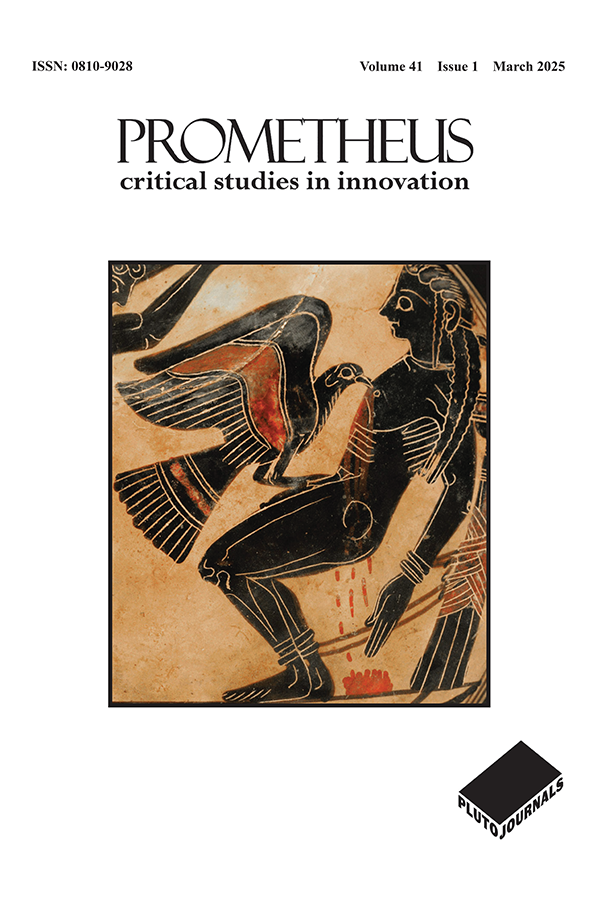
 Prometheus (Volume 41, Issue 1) opens with Stuart Macdonald’s editorial “Impoverishing peer review”, a wonderfully witty critique of the peer review system and the distorting effects of article processing charges and the use of impact factors as a marker of quality.
In “From tools to symbols: exploring the complex nexus of smartphones in Bangladesh”, Syed Arman Hossain, Md. Ashraful Alam and Md. Mostafa Mushfiq Talukder examine a new dimension of technological innovation. They find that the smartphone is not just a status symbol, but is increasingly seen as evidence of the character and competence of its owner, especially by employers.
Prometheus (Volume 41, Issue 1) opens with Stuart Macdonald’s editorial “Impoverishing peer review”, a wonderfully witty critique of the peer review system and the distorting effects of article processing charges and the use of impact factors as a marker of quality.
In “From tools to symbols: exploring the complex nexus of smartphones in Bangladesh”, Syed Arman Hossain, Md. Ashraful Alam and Md. Mostafa Mushfiq Talukder examine a new dimension of technological innovation. They find that the smartphone is not just a status symbol, but is increasingly seen as evidence of the character and competence of its owner, especially by employers.
In “‘Foreignize yourself’. What has translation to do with innovation? A translation studies approach to hybrid innovation”, Kayoko Nohara, Betti Marenko, Giorgio Salani and Kohei Kanomata explore an Anglo-Japanese training programme conducted at the Institute of Science Tokyo in collaboration with Central Saint Martins, University of the Arts London.
Large Language Models (LLMs) are the focus of two articles in this issue. In “Generative artificial intelligence in qualitative analysis: a critical examination of tools, trust and rigor”, Joaquim Jose Carvalho Proença and Carmen Ramos Vera compare the performance of five popular LLMs and offer recommendations for building a stronger foundation for responsible human and AI collaboration in research and practice.Brian Martin also examines LLMs, focusing in particular on their capacity to plagiarise. In “Automated plagiarism”, he argues that LLMs actually commit a new form of plagiarism that differs significantly from typical human plagiarism. This he calls ‘automated plagiarism’.
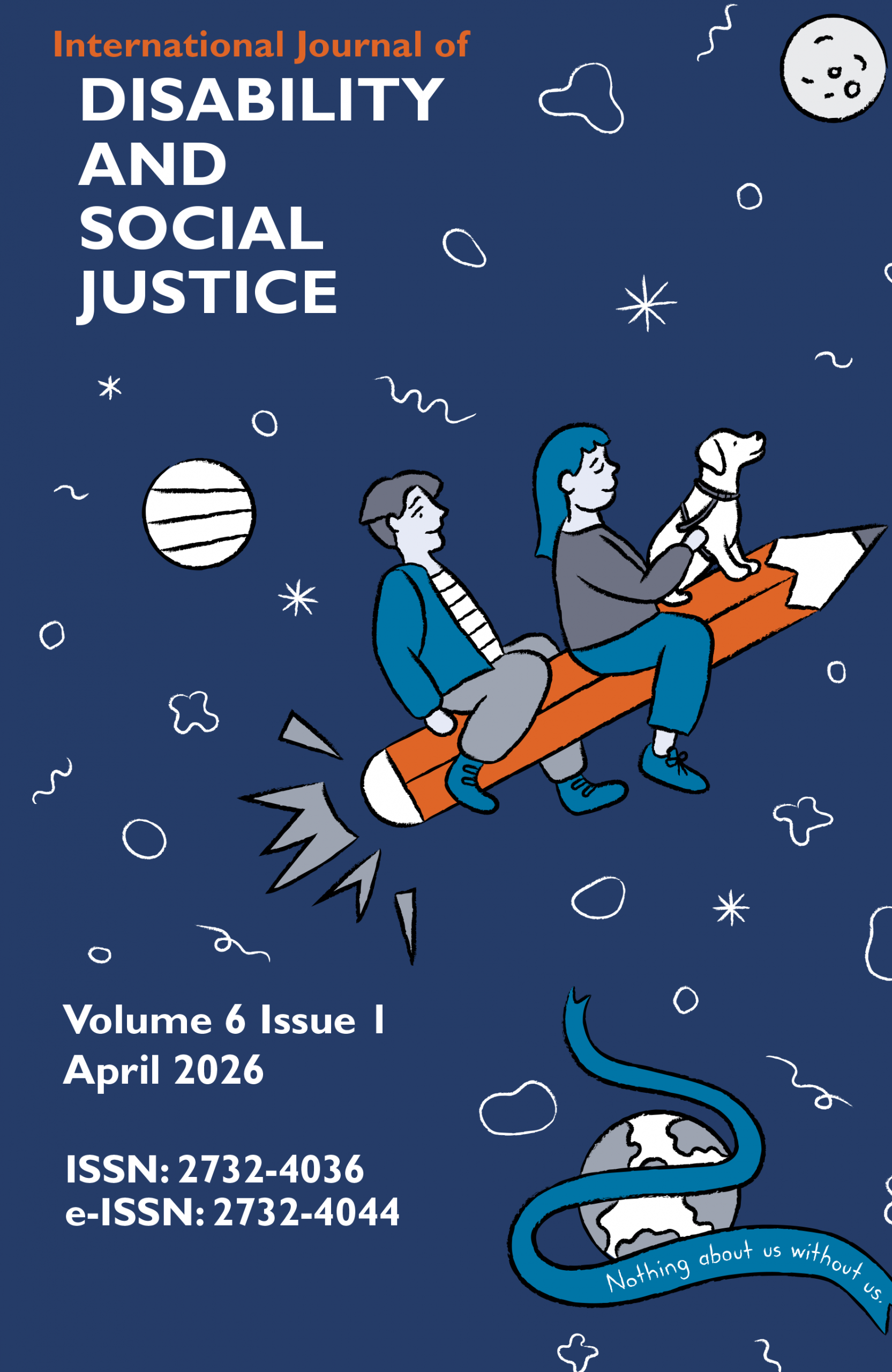 The latest issue of International Journal of Disability and Social Justice (Volume 6, Issue 1) begins with James Gould’s article “Turning Theory into Practice: Enacting Health Justice for Adults with Intellectual Disabilities”. Gould integrates political philosophy, international covenants and empirical data from the health sciences, with a focus on the social systems that support health, rather than access to clinical services alone.
In “Positive Visibility: Demystifying Albinism in Sierra Leone” Charlotte Baker, Abs Dumbuya, Mohammed Osman Kamara, Sarah Snow, and Kevin Amoke draw on the findings of fieldwork interviews from a recent study in Sierra Leone. The article highlights the challenges faced by people with albinism, including lack of access to education and healthcare, as well as stigma linked to misconceptions about the condition. Dumisani J. Ngoma considers “The Limits of the Reasonable Accommodation Duty under Zambian Law: A Comparative Legal Perspective”.
The issue also explores disability, community and communication in different contexts. In “Online Gaming and Emancipation: The Case of People with Physical Disabilities Communities of Practice” Christopher Hastas, Irena Veljanova, and Michael Houlbrook examine the experiences of 15 young Australian gamers with physical disabilities. Julia Barnes, Rosie Rushton, and Lila Kossyvaki consider “Exploring the Touch Encounters of Individuals with Profound and Multiple Learning Disabilities (PMLD) at School: Comparing In-Person with Video Observations” through an exploratory case study approach.
Finally, Sonali Shah, Karl Atkin, Helen Spiby, Thomas Blackett, and Diane Trusson study maternity care in “Choices and Support on the Maternity Journey in the UK: Voices from Women with Cerebral Palsy”. Their findings emphasise the need for sensitive and responsive care throughout the maternity journey, and highlight a need for further training and education among healthcare professionals.You can find Plain English versions of all the articles on the journal’s website here.
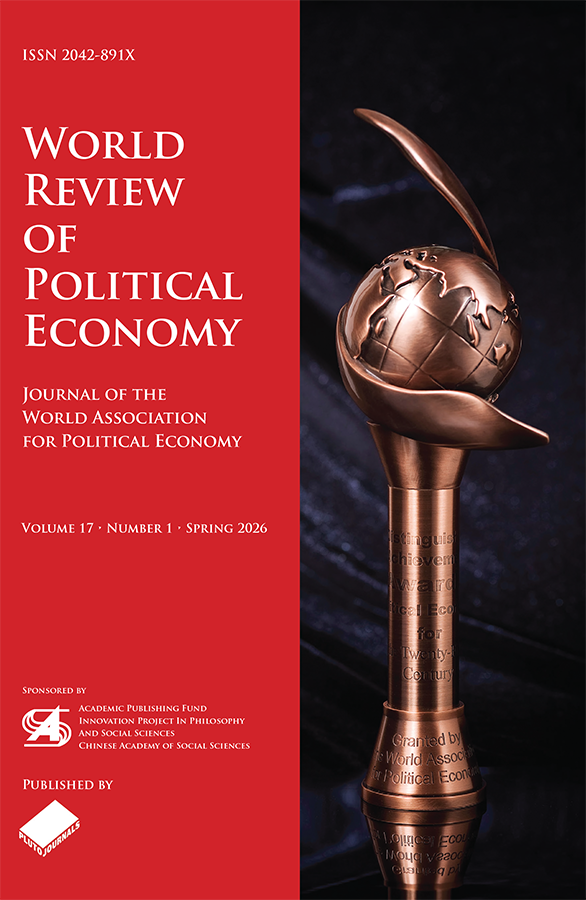 World Review of Political Economy (Volume 17, Issue 1) begins with Yu Zhang’s article “Revisiting the Theory of Capital under the Conditions of the Socialist Market Economy”. The article explains how capital, money and resources used to produce wealth, should be understood and managed in China’s socialist market economy today.
In “Imperialism and Global Divergent Development Paths: A Very Long-Run Empirical Approach”, Omar Osman looks at 500 years of global history to understand why some countries became rich while others stayed poor. Federico Traversa examines why many Latin American countries adopted similar market-oriented reforms after the debt crisis in “Political Economy of Major Institutional Change: Debt Crisis, Power Asymmetries, and Structural Adjustment in Latin America”.
“Reclaiming Imperialism as a Theoretical Concept Grounded in Concrete History: Review of Imperialism, As Rampant Today as in the Past by Samir Saul” by Jude Kadri examines Samir Saul’s book as a decisive intervention against the conceptual dilution of imperialism in contemporary academia.The issue concludes with Hao Fu and Guzailinuer Aihemaiti’s review of last year’s WAPE forum, “Multipolarity in the 21st Century: Challenges and Opportunities in Political Economy—A Review of the 18th Forum of World Association for Political Economy”, as well as acceptance speeches for the World Marxian Economics Award from Korkut Boratav, Xinhua Jian, Radhika Desai and Ganqiang He.